
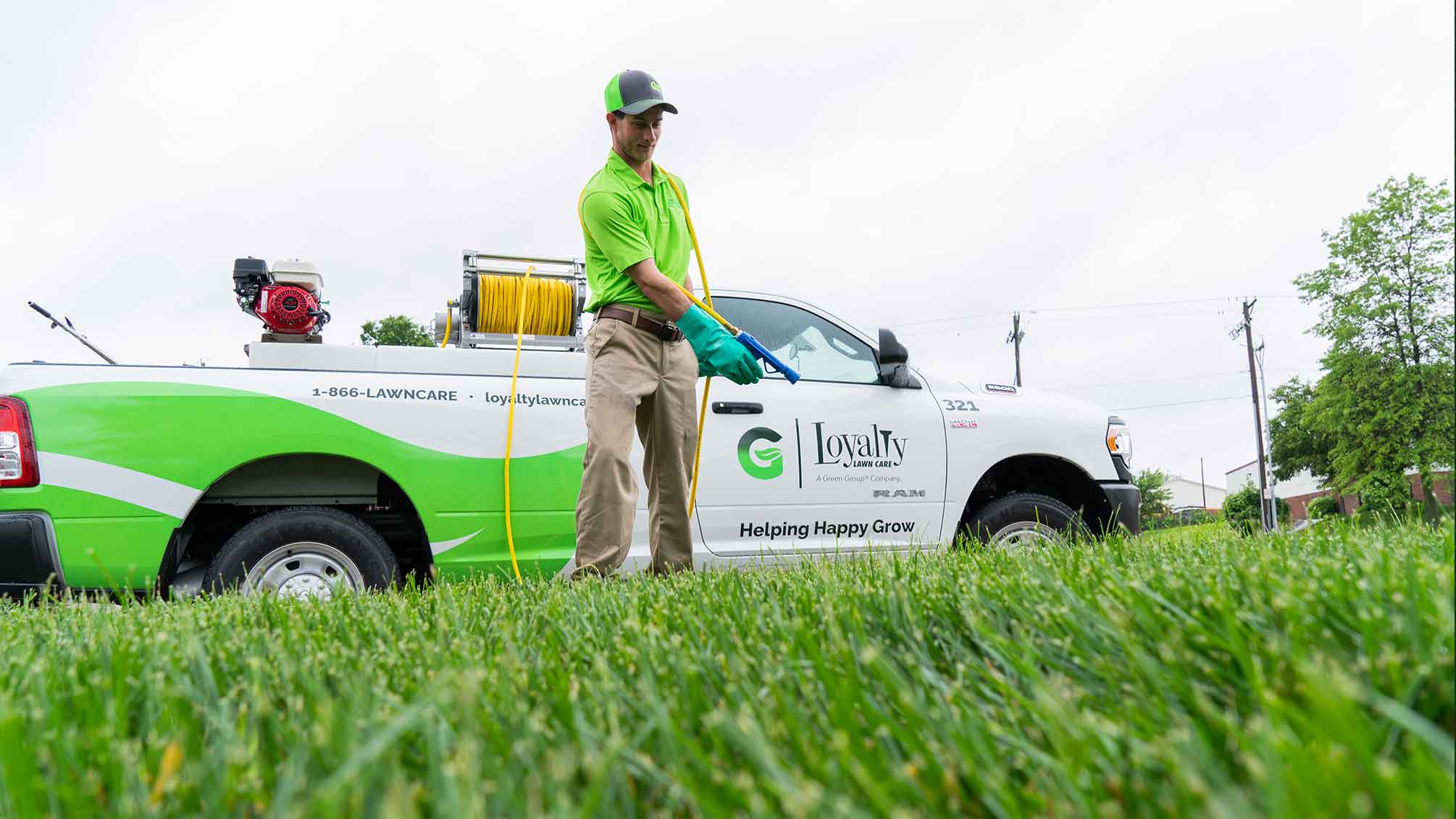
Helping Happy Grow
Loyalty Lawn Care's
Commitment

You’ll always receive the personalized, friendly, and professional customer service that you deserve.
Each home is unique. Therefore, the lawn care services and pest control needs of homeowners vary among customers. That being said, you can always expect our lawn & landscape professionals to tailor our services to meet your specific needs. Customer satisfaction is our priority.

Our mission is to protect you, your family, your pets, and your property.
We have extensive knowledge in St. Louis lawn care and pest control, and we’re ready to put our years of experience to work for you. At Loyalty, we only use CAUTION LABELED CHEMICALS and we do offer natural pesticides that provide immediate knockdown and long residual control for a variety of insects.

Free Lawn Inspections
Ready to have the best lawn on the block? We offer a free lawn inspection to every potential client, so call (636) 275-0242 today to schedule your appointment with our team!
Free Lawn Care Estimates in St. Louis, MO
We are committed to providing top-notch lawn care in St. Louis, Missouri.
We offer the best care for your lawn and landscape so that it will look great throughout the year. We offer a variety of services throughout the St. Louis area to suit your specific lawn needs including lawn fertilization, weed control, aeration, seeding, tree & shrub treatments, and outdoor pest control. With over two decades of reliable lawn care experience, we’re proud to be a company with a reputation for the best results and customer service.
Our Lawn Care Program
Put your trust in our professionals at Loyalty for all of your lawn care needs.
Loyalty Lawn Care has been servicing the greater St. Charles and St. Louis areas for over two decades. We will listen to your concerns and develop the best options to meet the needs of your lawn.
Additional
Services
What Our Customers are Saying


Service Areas
Contact us today to find out more about our wide array services including weed control, pest control, and lawn fertilizer throughout the greater St. Louis, MO area.
Loyalty Lawn Care is a lawn care service company based in St. Charles, MO. Since 1998, we have served St. Louis and the surrounding area.
